
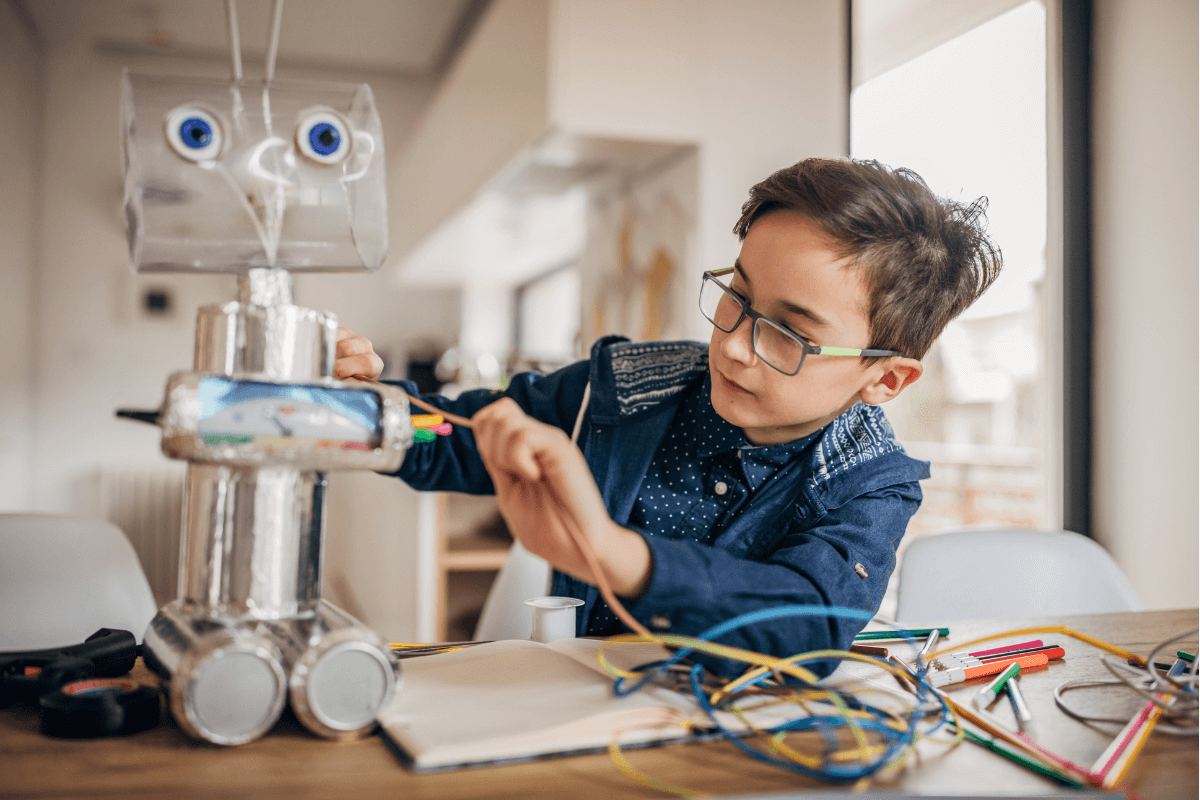
The Role of Robotics in Shaping the Future of Education
Robotics is no longer limited to science fiction or big factories—it is now a part of classrooms, labs, and even homes. From LEGO robots to advanced humanoids, robotics is helping children learn science, technology, engineering, and math (STEM) in a hands-on, engaging way. Education with robotics not only teaches technical skills but also builds problem-solving, creativity, and teamwork.
This article explores how robotics is transforming education and preparing students for the future.
1. Robotics as a Learning Tool
Robots make abstract concepts real. Instead of just reading about physics or coding, students can program a robot to move, sense, or react. This practical application helps them retain knowledge better.
-
Example: Kids learning coding by programming robots to follow a line or detect obstacles.
-
Benefit: Hands-on learning bridges the gap between theory and practice.
2. Boosting STEM Education
STEM skills are in high demand globally. Robotics combines all four areas:
-
Science (sensors, electricity, mechanics)
-
Technology (coding, apps, connectivity)
-
Engineering (designing and building robots)
-
Math (algorithms, geometry, measurements)
3. Encouraging Creativity & Innovation
Robotics isn’t about following instructions alone—it encourages students to experiment. For example, a simple robot car project can lead to innovations in automation, transportation, or environmental solutions.
4. Building Problem-Solving Skills
Students face real-world challenges like “Why isn’t the robot moving?” or “How can I make it faster?” This trial-and-error process teaches perseverance, logical thinking, and analytical skills.
5. Teamwork and Collaboration
Robotics projects are often group-based. Students must share ideas, assign roles, and collaborate—skills essential for the modern workplace.
6. Robotics Competitions
Events like FIRST Robotics, World Robot Olympiad, and LEGO Robotics Challenges inspire children to innovate while competing globally. Such competitions also expose them to career opportunities.
7. Career Readiness
Robotics education prepares kids for future careers in AI, automation, healthcare, aerospace, and more. Early exposure to robotics gives them a competitive edge in tomorrow’s job market.
8. Robotics for Special Education
Robots are also used to assist differently-abled students. For example, social robots help children with autism improve communication skills.
Conclusion
Robotics is revolutionizing how students learn and grow. By blending fun with future-ready skills, it creates confident, creative, and capable learners. At Brain Teasers, we use robotics as a gateway for children to explore innovation and prepare for careers that don’t even exist yet.